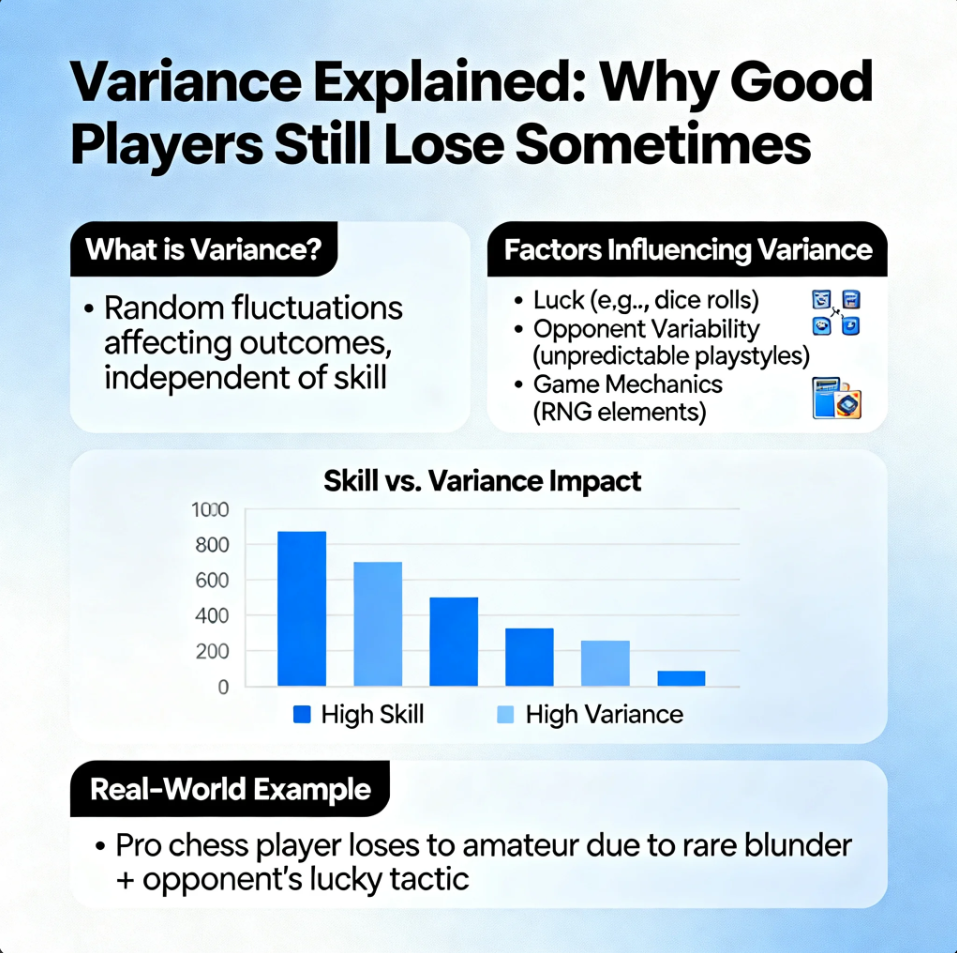

In games of skill and chance, good players can still lose. This phenomenon often puzzles beginners and frustrates even experienced players. The reason lies in variance—the natural fluctuation of outcomes in games, particularly those involving elements of luck.
Understanding variance helps players set realistic expectations, manage risk, and develop a long-term strategy rather than expecting constant wins.
What is Variance?
Variance refers to the statistical measure of how much outcomes deviate from the average. In gaming, it represents the natural swings between winning and losing even when playing optimally.
Key points about variance:
- It applies to both luck-based and skill-based games
- Short-term results may differ significantly from expected outcomes
- Long-term results tend to converge toward the statistical average
Recognizing variance helps players understand that losing is part of the game, not a reflection of skill alone.
The Role of Probability
Even the best strategies cannot overcome probability. Every decision in a game has a chance of success or failure.
- Outcomes are influenced by randomness and chance events
- Optimal play increases expected value but doesn’t guarantee a win
- Probability ensures that unlikely outcomes happen occasionally
Variance is essentially the visible effect of probability in action.
Short-Term vs Long-Term Results
Short-term outcomes are highly susceptible to variance. A skilled player might experience losing streaks, while a less experienced player might get lucky.
- Short-term: unpredictable; results fluctuate widely
- Long-term: skill and strategy prevail; results align closer with expected value
Understanding this distinction helps players remain patient and persistent.
Managing Variance
While variance cannot be eliminated, it can be managed:
- Set realistic expectations for wins and losses
- Use bankroll management to survive losing streaks
- Avoid tilting or making emotional decisions
- Track performance over a large sample size rather than individual sessions
Good players prepare for variance, ensuring that short-term losses do not undermine long-term success.
Psychological Impact
Losing despite skill can be frustrating and demoralizing. Understanding variance helps mitigate emotional swings.
- Accepting losses as part of the game reduces stress
- Focusing on process rather than immediate outcomes builds resilience
- Maintaining a balanced perspective improves decision-making
Players who respect variance are more likely to sustain long-term growth.
Conclusion
Variance explains why even good players lose sometimes. It is the natural fluctuation of outcomes driven by probability, randomness, and short-term swings. Skill increases expected value, but luck will always play a role.
By understanding variance, managing risk, and keeping a long-term perspective, players can improve performance, maintain emotional control, and make the most of their gaming experience.