Poker player analyzing betting patterns on a table with cards and chips

Reading Betting Patterns: The Secret Language of Poker Players

Poker isn’t just a game of cards—it’s a game of observation, strategy, and psychology. Beyond the obvious moves, the way a player bets reveals clues about their hand, intentions, and even personality. Reading betting patterns is like learning a secret language, giving observant players a distinct advantage at the table.

Here’s how to decode these subtle signals and improve your poker strategy.


1. Understanding the Basics of Betting Patterns

Every poker player has tendencies—some predictable, some deceptive. Betting patterns include:

  • Consistent bet sizes for certain hands
  • Frequent raises or checks in specific situations
  • Timing tells: how quickly or slowly a bet is made
  • Position-based behavior: early vs. late position betting

Recognizing these patterns helps you anticipate opponents’ moves and make informed decisions.


2. The Significance of Bet Size

Bet size often reflects confidence or caution:

  • Small bets can indicate a weak hand, an attempt to see more cards cheaply, or a trap for aggressive opponents.
  • Large bets might show strength—or a bluff designed to intimidate.

Compare how a player usually bets with how they bet in a given situation; deviations often tell a story.


3. Timing Tells: More Than Just Speed

The speed of a player’s action is a subtle but powerful clue:

  • Instant bets: Could indicate a pre-planned or confident move.
  • Long pauses: May suggest uncertainty or contemplation of a bluff.
  • Pattern breaks: A sudden change in timing can be intentional misdirection.

Observing these timing cues over multiple hands helps build a behavioral profile.


4. Patterns Across Different Positions

Position matters in poker, and betting behavior often changes depending on where a player sits:

  • Early position: Typically more conservative; only strong hands are played aggressively.
  • Late position: Players can afford more speculative or deceptive moves.
  • Blind positions: Players may defend with weaker hands, creating unique patterns.

Tracking how a player acts in each position adds depth to your understanding of their tendencies.


5. Identifying Bluffs Through Betting Trends

Bluffs often leave patterns behind, even subtle ones:

  • Overly aggressive betting after a passive streak
  • Sudden raises without the usual setup
  • Repeating bets that seem inconsistent with prior behavior

Learning these cues lets you call or avoid bluffs strategically, minimizing losses and maximizing gains.


6. Using Betting Patterns to Your Advantage

Once you can read patterns reliably:

  • Adjust your own strategy to exploit opponents’ tendencies
  • Decide when to fold, call, or raise with better precision
  • Predict future bets and control the table dynamics

Combining observation with intuition makes betting pattern reading a powerful skill.


7. Practice Makes Perfect

Like all poker skills, reading betting patterns requires practice:

  • Watch experienced players in action (live or online)
  • Take notes on tendencies over multiple sessions
  • Analyze your own patterns to avoid giving away clues

The more hands you observe, the sharper your “poker language” becomes.


Conclusion

Poker is a game of information—and betting patterns are one of the richest sources of intel at the table. By learning to read these subtle signals, you gain insight into opponents’ strategies, uncover bluffs, and make more confident decisions.

Mastering this secret language transforms a game of chance into a game of skill, strategy, and psychological finesse.

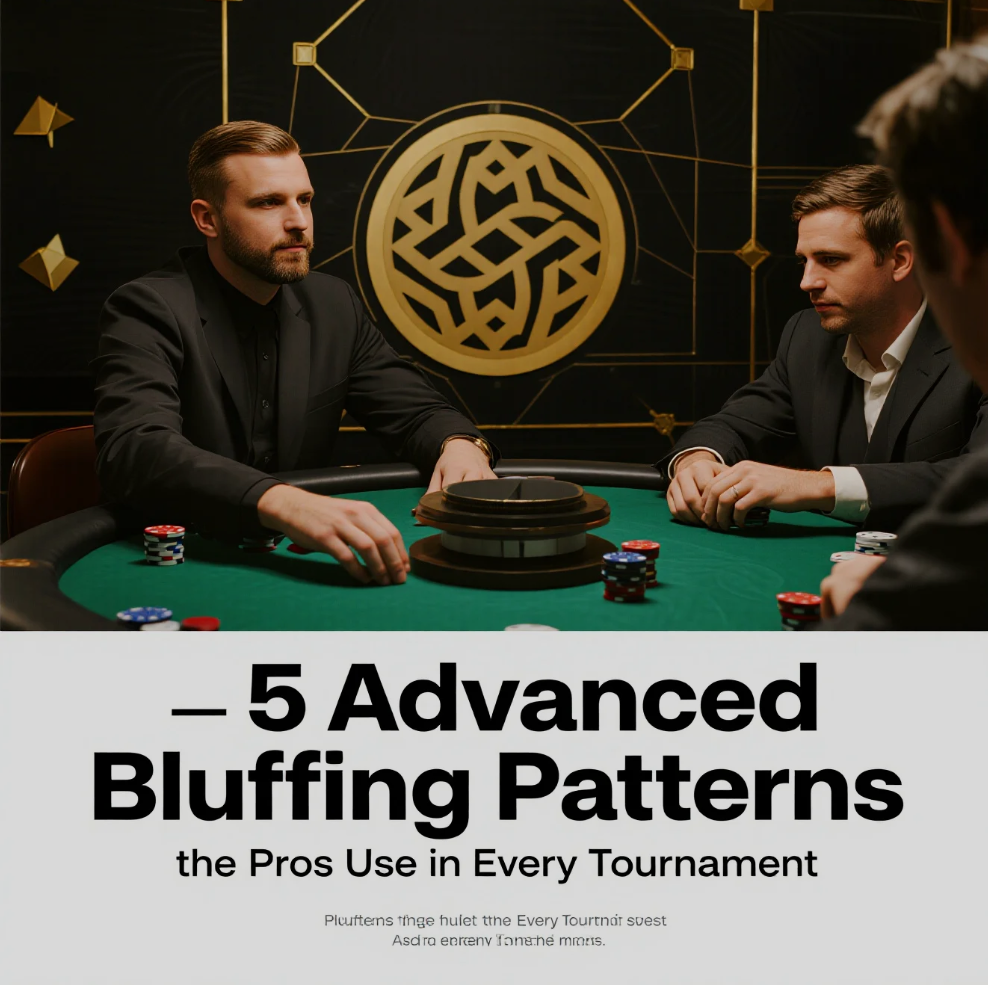
Professional poker player executing a strategic bluff during a high-stakes tournament

5 Advanced Bluffing Patterns the Pros Use in Every Tournament

Bluffing is a cornerstone of high-level poker, but it’s not just about pretending to have a strong hand. Professional players use carefully structured bluffing patterns to control the table, manipulate opponents, and maximize their chip stack. Mastering these advanced strategies can elevate your tournament game from average to elite.

Here are five advanced bluffing patterns used by the pros.


1. The Continuation Bet Bluff

A continuation bet (c-bet) is when a player who raised pre-flop continues the aggression on the flop, regardless of whether the hand improved. Pros use this to maintain the narrative that their hand is strong.

Key points:

  • Target players who fold too often to aggression
  • Use selective flop textures (dry boards work best)
  • Avoid predictable patterns—mix in real value bets to stay balanced

This keeps your opponents guessing and allows you to take down pots without showing your cards.


2. The Double Barrel Bluff

The double barrel involves betting on both the flop and the turn, representing a strong hand. Pros often use this when the turn card doesn’t improve the board for most ranges, increasing fold equity.

Tips:

  • Choose opponents who are cautious or can fold
  • Keep sizing consistent with your story
  • Plan for river play—sometimes checking the river can extract value or induce a bluff-catch

This tactic pressures medium-strength hands to fold before showdown.


3. The Check-Raise Bluff

A check-raise bluff can flip the table by taking control unexpectedly. Pros use it to represent a very strong hand while leveraging position and timing.

How to execute:

  • Ideal on later streets with scare cards
  • Requires understanding opponents’ tendencies
  • Works best in tight or passive fields

This move adds layers to your table image and can intimidate opponents into folding premium hands.


4. The Semi-Bluff

Unlike a pure bluff, a semi-bluff involves a hand with potential to improve, such as a straight or flush draw. Pros use semi-bluffs to create fold equity while maintaining a chance to win if called.

Why it works:

  • Threatens opponents with immediate strength
  • Maintains a chance to hit the nuts
  • Keeps your betting range balanced

Semi-bluffs are versatile and can be deployed across multiple streets.


5. The Opportunistic Spot Bluff

Pros are masters at spotting moments when opponents are likely weak, even without a structured pattern. These opportunistic bluffs rely on:

  • Timing and table dynamics
  • Opponent tilt or fatigue
  • Small adjustments in bet sizing

These bluffs are less about strategy and more about awareness—capitalizing on every foldable moment.


Conclusion

Bluffing in poker is an art, not a gamble. Professional players succeed because they blend structured patterns with situational awareness, carefully reading opponents while maintaining a credible story. By mastering the continuation bet, double barrel, check-raise, semi-bluff, and opportunistic bluff, you can add unpredictability, pressure, and strategic depth to your tournament play.

Remember, it’s not just about bluffing—it’s about knowing when and how to bluff.

Poker player reviewing hand histories on a laptop to improve strategy

Analyzing Hand Histories: Learning from Past Games

In poker, experience alone isn’t enough to become a consistently winning player. One of the most effective ways to improve is analyzing hand histories. By reviewing past games, you can identify mistakes, recognize patterns, and refine your strategy for future sessions.

Why Analyzing Hand Histories Matters

Hand histories provide a detailed record of every action during a poker game: bets, raises, folds, and outcomes. By studying these records, players can:

  • Spot recurring mistakes in their decision-making.
  • Understand opponents’ tendencies and betting patterns.
  • Evaluate risk versus reward in key situations.
  • Track progress over time to see improvement.

How to Review Your Hand Histories

  1. Focus on Key Hands: Start with hands where you lost big pots or made uncertain decisions.
  2. Break Down Each Decision: Ask why you made each move and if a different choice would have improved your odds.
  3. Compare with Optimal Play: Use software tools or poker theory to analyze whether your decisions align with best practices.
  4. Take Notes: Keep a record of insights to reference in future games.

Learning from Opponents

Hand histories aren’t just for self-reflection. By reviewing how opponents play, you can anticipate their strategies in future games. Patterns like frequent bluffing, over-aggression, or passive play become more obvious, giving you a tactical edge.

Turning Knowledge into Results

The key to improving through hand history analysis is consistency. Regularly reviewing hands after each session or weekly allows you to continually refine your approach, avoid repeating mistakes, and increase your profitability at the tables.


Conclusion

Analyzing hand histories transforms past games into learning opportunities. By understanding your decisions and observing your opponents, you gain valuable insights that can significantly boost your poker performance. The more diligently you review, the sharper your strategy becomes—and the closer you get to becoming a winning player.

Poker player carefully managing bets and chip stack, illustrating smart pot control strategy in a tense card game.

The Art of Pot Control: Playing Smart in Every Hand

In poker, knowing when to inflate or limit the pot is just as crucial as knowing when to bluff. Pot control is a strategy that allows players to manage risk, protect their stack, and extract value from the hands they play.

Whether you’re at a live table or playing online, mastering pot control helps you play smarter, not just aggressively.


♠️ 1. What Is Pot Control?

Pot control is about managing the size of the pot relative to your hand strength and the stage of the game.

  • Small to medium pot: ideal when holding a marginal hand or drawing hand.
  • Large pot: best for strong hands where you want to maximize value.

💡 The goal is to avoid committing too many chips when the outcome is uncertain.


♣️ 2. Why Pot Control Matters

Without pot control, players risk:

  • Losing big with marginal hands
  • Overcommitting to draws or weak holdings
  • Giving opponents unnecessary leverage

Strategic pot control ensures you stay in the game longer and make profitable decisions consistently.


♦️ 3. Techniques for Smart Pot Control

  1. Check-Calling: Keeps the pot smaller while gathering information on opponents.
  2. Selective Betting: Bet just enough to protect your hand without inflating the pot unnecessarily.
  3. Position Awareness: Control the pot more effectively when acting last.
  4. Reading Opponents: Adjust pot size based on perceived hand strength of others.

Patience and observation are key — it’s as much mental as tactical.


♥️ 4. When to Let the Pot Grow

Pot control isn’t about being timid. There are times when you want the pot to swell:

  • Strong hands on favorable boards
  • Bluffing opportunities with high fold equity
  • Multi-way pots where aggression pays off

Knowing when to switch from controlling to building the pot is the hallmark of an experienced player.


🃏 5. Common Mistakes to Avoid

  • Overvaluing weak hands and inflating the pot
  • Ignoring table dynamics and opponents’ tendencies
  • Failing to adjust strategy based on stack size

💡 Mistakes in pot control are often costly, so disciplined practice is essential.


🚀 Conclusion: Mastering Pot Control

Pot control is about playing smart, not scared.
It balances aggression and caution, helping players minimize losses on weaker hands and maximize gains on strong ones.

By mastering this art, you can take control of every hand, make calculated decisions, and steadily improve your poker results.

🌟 Play smarter, control the pot, and let strategy guide your way to consistent success.