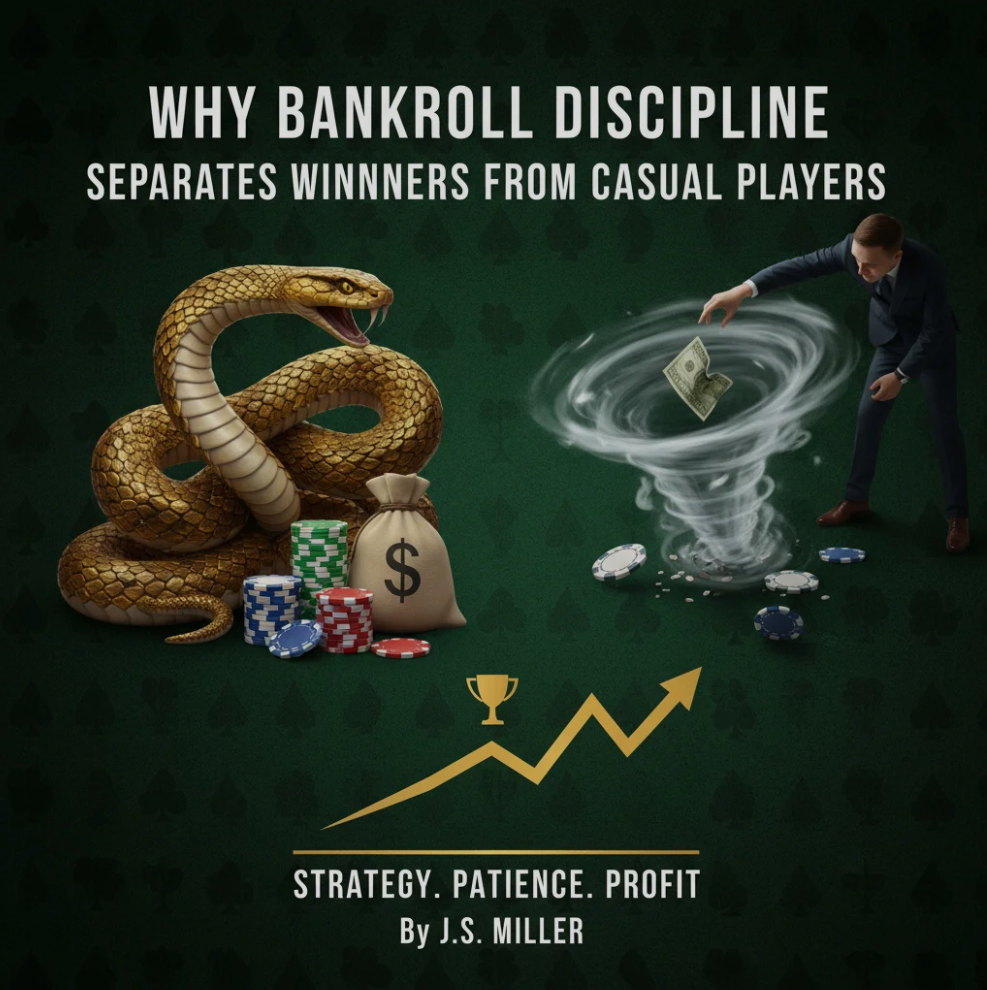
Why Bankroll Discipline Separates Winners from Casual Players
In gambling, skill and luck both play roles—but discipline with your bankroll is what truly separates winners from casual players. Professional players understand that managing funds is not just about how much you bet, but how consistently and strategically you do it.
Without proper bankroll management, even a skilled player can face losses that could have been avoided.
📊 1. Understanding Bankroll Discipline
Bankroll discipline is the practice of allocating and managing your gambling funds in a controlled and consistent way. It involves:
- Setting a dedicated gambling budget separate from living expenses
- Determining bet sizes based on your total bankroll
- Avoiding chasing losses impulsively
- Maintaining consistency in wagering strategies
Winners view gambling as a long-term game, not a one-time shot at fortune.
💡 2. Protecting Yourself from Big Losses
Casual players often risk too much too quickly, chasing short-term wins. This approach can lead to:
- Rapid depletion of funds
- Emotional decision-making
- Frustration and burnout
By contrast, disciplined bankroll management protects your money, allowing you to weather downswings and continue playing strategically.
🛠️ 3. Strategic Bet Sizing
A key element of bankroll discipline is bet sizing:
- Professionals typically risk only a small percentage of their bankroll per game
- Casual players often bet arbitrarily or impulsively
- Proper sizing allows for more plays and reduces the risk of ruin
Smart bet sizing maximizes the opportunity to profit while minimizing the chance of catastrophic losses.
🎯 4. Consistency and Emotional Control
Bankroll discipline isn’t just about money—it’s about mindset:
- Winners stick to their strategy regardless of wins or losses
- They avoid emotional decisions like chasing losses
- They treat gambling as a controlled, calculated activity
Consistency creates long-term advantages that casual players often miss.
📈 5. Adapting Your Strategy Based on Bankroll
Another advantage of proper bankroll management is flexibility:
- Adjust bet sizes based on current bankroll
- Switch games or stakes to optimize risk/reward
- Avoid high-risk bets that could jeopardize your entire fund
Being disciplined allows you to make rational, informed decisions rather than impulsive moves.
🌟 6. The Mindset Difference Between Winners and Casual Players
Ultimately, winners see gambling as a skill to manage resources wisely, while casual players often view it as entertainment with little strategy. Bankroll discipline teaches:
✅ Patience and control
✅ Strategic decision-making
✅ Risk management
✅ Long-term sustainability
It’s the difference between consistent success and repeated frustration.
🎉 Conclusion
Bankroll discipline is more than a rule—it’s a philosophy that separates serious winners from casual players. By managing your funds wisely, controlling bet sizes, and maintaining a consistent mindset, you can maximize your chances of long-term success while minimizing unnecessary risk.
In gambling, skill may win rounds, but discipline wins the game.