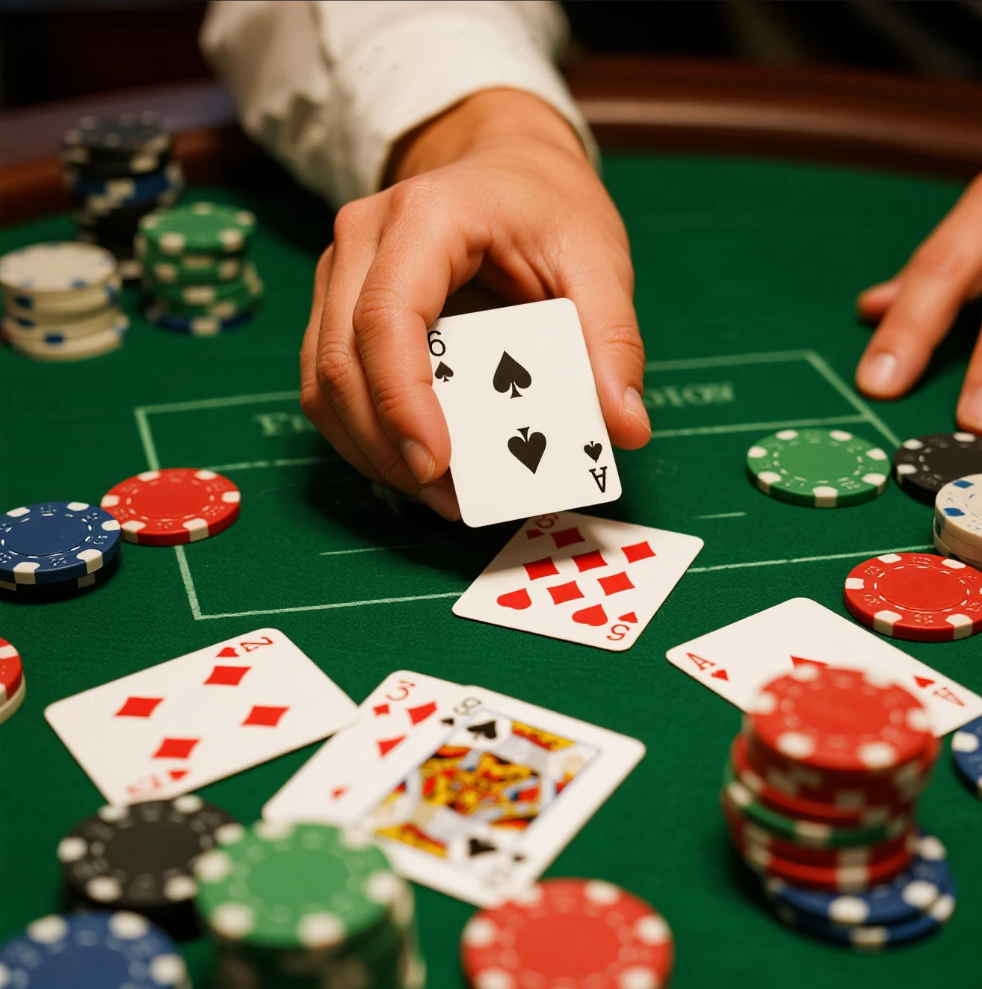

Poker can look intimidating at first—chips moving fast, players acting in turn, and unfamiliar terms flying around the table. But once you understand the poker flow step by step, the game becomes far more enjoyable. Poker is simply a repeating cycle of cards, bets, and decisions.
This guide walks you through that cycle clearly, from the first card dealt to the final chips pushed to the winner.
Step 1: The Dealer Button and Positions
Before any cards are dealt, poker establishes who acts when.
The Dealer Button
A round marker (the “button”) shows the dealer position. In home games, the person on the button often deals. In casinos, a professional dealer handles the cards, but the button still rotates each hand.
Why Position Matters
Poker is played in a circle, and players act clockwise. Acting later in the hand gives you more information—one of the most important advantages in poker.
Step 2: Blinds or Antes Are Posted
To create action, most poker games require forced bets.
In Texas Hold’em and Omaha:
- Small Blind (SB): posted by the player left of the button
- Big Blind (BB): posted by the next player left
Some games also include antes, small forced bets posted by everyone. These forced bets ensure there is always something to win.
👉 If you want a deeper explanation of blinds and betting rules, see:
https://www.pokernews.com
Step 3: Cards Are Dealt
Now the hand begins.
Texas Hold’em:
- Each player gets 2 private cards (hole cards)
Omaha:
- Each player gets 4 private cards (hole cards)
The dealer then prepares for the first betting round.
Step 4: Pre-Flop Betting Round
This is the first decision point and a major part of poker flow step by step.
Starting with the player left of the big blind, each player chooses one action:
- Fold: discard the hand and exit the round
- Call: match the current bet
- Raise: increase the bet
Action continues until all remaining players have matched the highest bet or folded.
Step 5: The Flop (Community Cards)
After pre-flop betting ends, the dealer places 3 community cards face-up on the table. This is called the flop.
These cards are shared by all players to make the best possible hand (using their hole cards plus community cards).
Step 6: Post-Flop Betting Round
Now betting starts again, usually with the player left of the dealer button still in the hand.
Players can:
- Check: pass the action without betting (only if no bet has been made)
- Bet: place the first bet in that round
- Call, Raise, or Fold depending on what happens before them
This round continues until all active players have responded.
Step 7: The Turn
Next, the dealer places the 4th community card, known as the turn.
This card often changes hand strength significantly, which is why the turn is a key betting street in strategy.
Step 8: Turn Betting Round
Another betting round follows with the same flow:
- Check or bet
- Call, raise, or fold
- Continue until the betting is balanced
Step 9: The River
The dealer reveals the 5th and final community card, called the river.
By now, every player has access to:
- Their private cards
- All five community cards
This is the last chance to bet, bluff, or extract value.
Step 10: Final Betting Round
The last betting round happens after the river.
Players decide whether to:
- Bet for value
- Bluff
- Check and see a showdown
- Fold if facing a bet they can’t justify calling
Step 11: Showdown (If More Than One Player Remains)
If at least two players are still in after the final betting round:
- Players reveal their hands
- The best 5-card poker hand wins
If everyone folds to a bet earlier, the last remaining player wins without showing cards.
👉 For official hand rankings, you can reference:
https://www.wsop.com/poker-hands/
Step 12: Chips Are Awarded and the Button Moves
The dealer pushes the pot to the winner, and then:
- The dealer button moves one seat clockwise
- New blinds are posted
- A new hand begins
That’s the full poker cycle—repeat it, and you’re officially following poker flow like a pro.
Quick Recap: Poker Flow Step by Step
- Button & positions set
- Blinds/antes posted
- Cards dealt
- Pre-flop betting
- Flop
- Betting
- Turn
- Betting
- River
- Betting
- Showdown
- Pot awarded, button moves
Final Thoughts
Once you understand poker flow step by step, poker becomes a game of rhythm: information, decisions, and pressure across the betting streets. Whether you’re playing casually with friends or watching tournaments online, knowing the structure makes everything easier to follow—and far more fun.