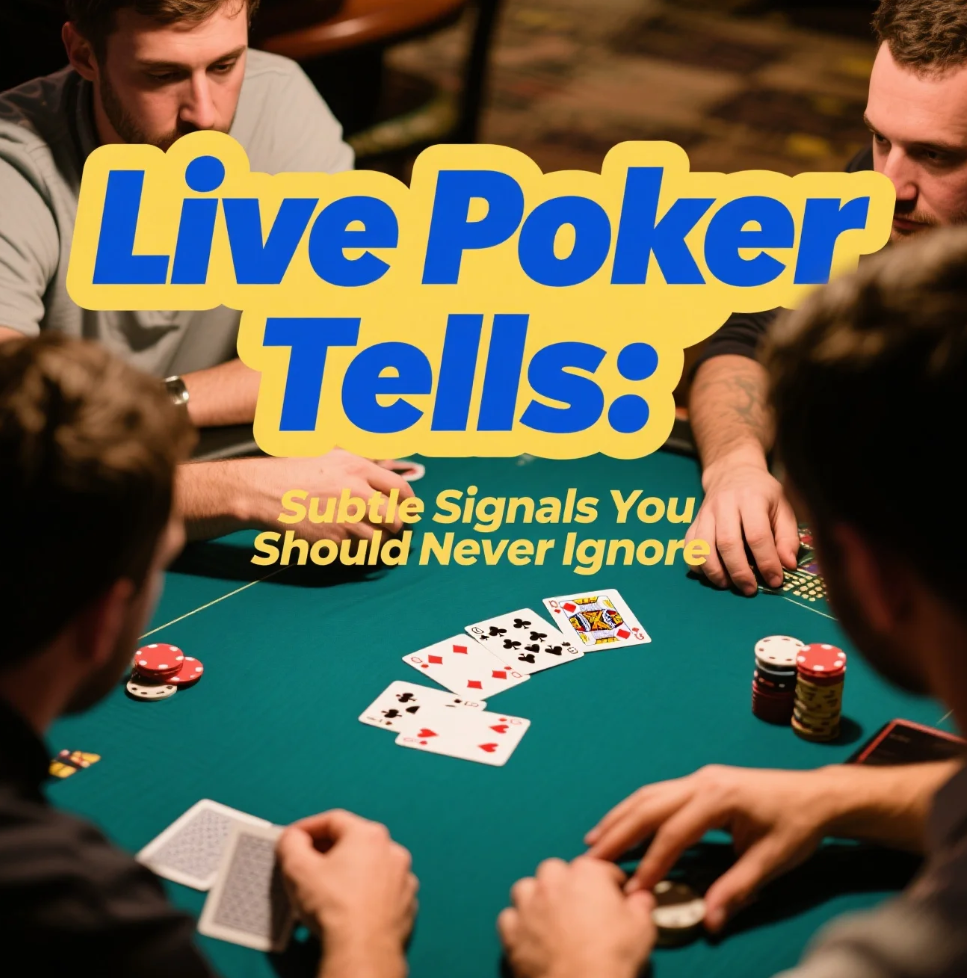

In live poker, cards matter—but people matter more. Unlike online play, live games offer a powerful edge: the ability to read opponents through behavior, timing, and unconscious reactions.
These signals, known as live poker tells, are often subtle. Miss them, and you miss value. Notice them, and you gain information no solver can provide. This guide breaks down the tells experienced players watch for—and why you should never ignore them.
What Are Live Poker Tells?
A poker tell is any observable behavior that gives insight into an opponent’s hand strength, confidence, or intentions.
Tells can be:
- Physical (body language, breathing, posture)
- Verbal (tone, speed, choice of words)
- Timing-based (bet speed, hesitation)
- Behavioral (habits, rituals, reactions)
The key is consistency and context—not isolated moments.
1. Hand & Chip Movement Tells
Hands often betray the truth before the mind catches up.
What to Watch For
- Shaky hands: Often signal excitement → usually strong hands
- Instant chip grabs: Indicates pre-planned aggression
- Hesitant reaches: Can suggest uncertainty or weakness
- Overly neat stacking: Sometimes a comfort response when nervous
Sudden changes in chip-handling behavior are especially meaningful.
2. Breathing and Pulse Changes
Breathing is one of the hardest tells to fake.
Common Breathing Tells
- Shallow or rapid breathing: Adrenaline spike (often strong hands)
- Forced calm breathing: Player trying to appear relaxed
- Visible neck pulse: Emotional response to a big moment
These tells are strongest in high-stakes or high-pressure pots.
3. Eye Behavior: More Than Eye Contact
Contrary to popular belief, eye contact alone isn’t the tell—changes in eye behavior are.
Eye-Related Tells
- Sudden avoidance after betting: Often strength
- Staring at the board: Player checking if it “looks scary”
- Watching opponents closely: Often bluffing
- Looking away quickly after checking cards: Genuine hand strength
Baseline behavior matters more than stereotypes.
4. Betting Speed Tells
Timing is one of the most reliable live poker tells.
What Timing Reveals
- Instant bets: Often strong or pre-decided
- Long pauses then big bets: Polarized range (very strong or bluff)
- Quick checks: Usually weakness
- Delayed calls: Indecision or marginal holdings
Pay attention to when players think—not just how long.
5. Speech and Verbal Tells
Talking at the table is rarely neutral.
Common Verbal Tells
- Unprompted explanations: Often weakness
- Overconfidence or joking: Can mask nervousness
- Sudden silence from a talkative player: Often strength
- Voice pitch rising: Emotional excitement
Players trying to control the narrative are often bluffing.
6. Posture and Stillness
Stillness itself can be a tell.
Posture Signals
- Frozen posture: Strong hand, avoiding giveaways
- Sudden movement after betting: Nervous energy
- Leaning forward: Engagement or bluff interest
- Leaning back: Comfort, often strength
Changes matter more than positions.
7. The Power of Baselines
The most important concept in reading live poker tells is baseline behavior.
Why Baselines Matter
- Everyone is different
- A tell is only meaningful when behavior changes
- One player’s “nervous” is another’s normal
Observe players early in sessions—especially in small pots—to establish patterns.
8. Tells You Should Be Careful With
Not all tells are reliable.
Often Misleading
- Sunglasses and hoodies
- Hollywood-style acting
- One-time reactions
- Fake reverse tells
Experienced players sometimes intentionally give false signals. Trust patterns, not performances.
How to Use Tells Effectively
Live poker tells should support decisions, not replace strategy.
Best Practice
- Combine tells with betting patterns
- Use tells to adjust marginal decisions
- Avoid overreacting to single signals
- Stay aware of your own tells
Reading tells is about information—not certainty.
Conclusion
The best live poker players don’t rely on dramatic gestures—they notice quiet changes. Breathing shifts, timing variations, posture changes, and speech patterns all provide insight when viewed through the lens of consistency.
By learning to recognize and interpret live poker tells, you gain access to one of the most powerful advantages in live play: understanding people when they don’t realize they’re speaking.