
In poker, winning isn’t just about the hands you hold—it’s about understanding who you’re up against. The distinction between playing cards and playing players is crucial, and mastering it separates casual participants from skilled strategists.
Let’s explore why focusing on the people at the table can be as important as the cards in your hand.
Playing Cards: The Basics
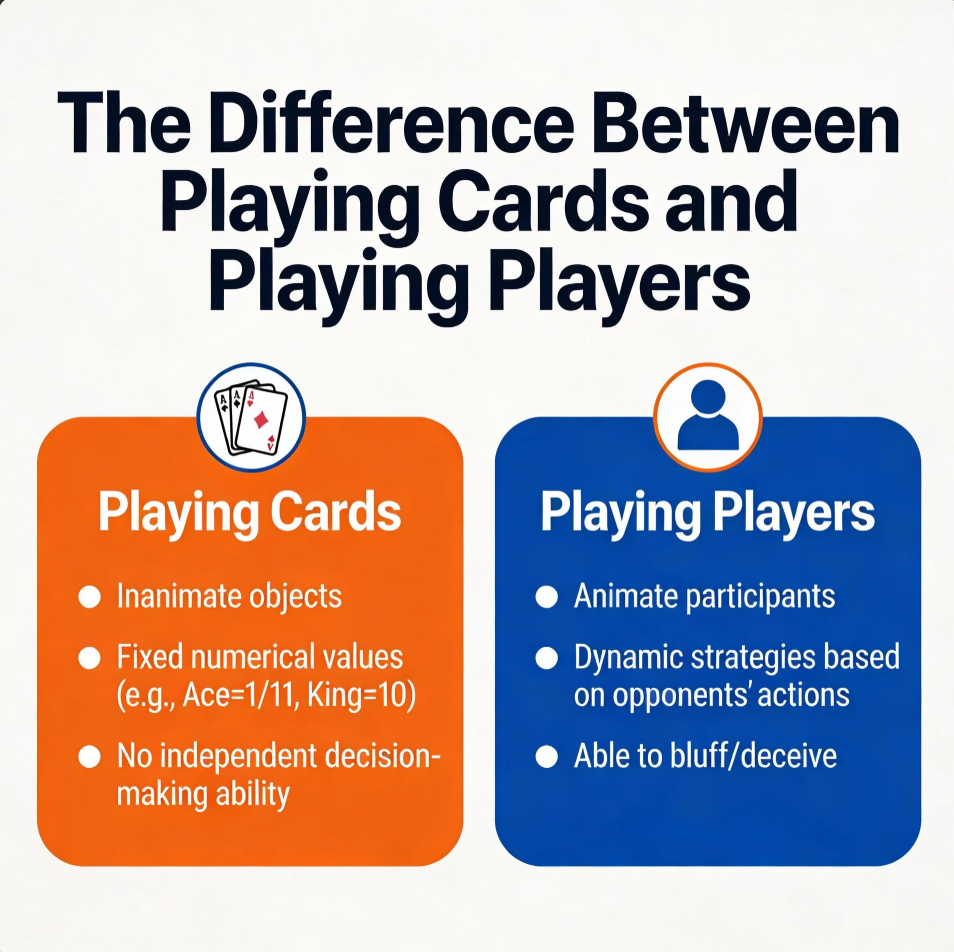
“Playing cards” refers to the straightforward approach of making decisions based solely on the hand you’re dealt.
Key principles include:
- Understanding hand rankings
- Calculating odds and probabilities
- Recognizing potential draws and combinations
This strategy is foundational, but it’s reactive—relying only on what is visible rather than anticipating opponents’ behavior.
Playing Players: The Strategic Edge
“Playing players” takes poker to the next level. Here, success comes from reading opponents, predicting patterns, and leveraging psychology.
Elements of playing players:
- Observing betting patterns and timing
- Recognizing tells and behavioral cues
- Understanding player tendencies (aggressive, passive, tight, loose)
- Manipulating perception to induce mistakes
Essentially, you play the person more than the cards, turning the game into a mental contest.
Why Players Often Trump Cards
Even the best hand can lose if misplayed against savvy opponents. Conversely, weaker hands can win through strategic play:
- Bluffing when the table perceives strength
- Folding strong hands if an opponent shows dominance
- Adjusting tactics dynamically based on behavior
This highlights that poker is not just a numbers game—it’s a game of human insight and adaptability.
Integrating Both Approaches
Expert players combine both strategies:
- Analyze your hand: Know your odds and potential outcomes.
- Study your opponents: Gauge tendencies and reactions.
- Adjust in real-time: Modify your approach as the table dynamics shift.
Balance between cards and players creates a complete, winning strategy.
Tips for Playing Players Effectively
- Take notes on opponents’ style and past actions
- Use position advantage wisely (act after observing others)
- Vary your own betting patterns to remain unpredictable
- Stay emotionally neutral—avoid giving away tells
These habits help transform a simple card game into a high-stakes mental exercise.
Final Thoughts: Mind Over Hand
While luck gives you the cards, skill comes from playing the players. Understanding this distinction allows you to maximize every opportunity, control the table, and turn probability into strategy.
In poker, the smartest players know: the game isn’t always about the hand you hold—it’s about the people sitting across from you.