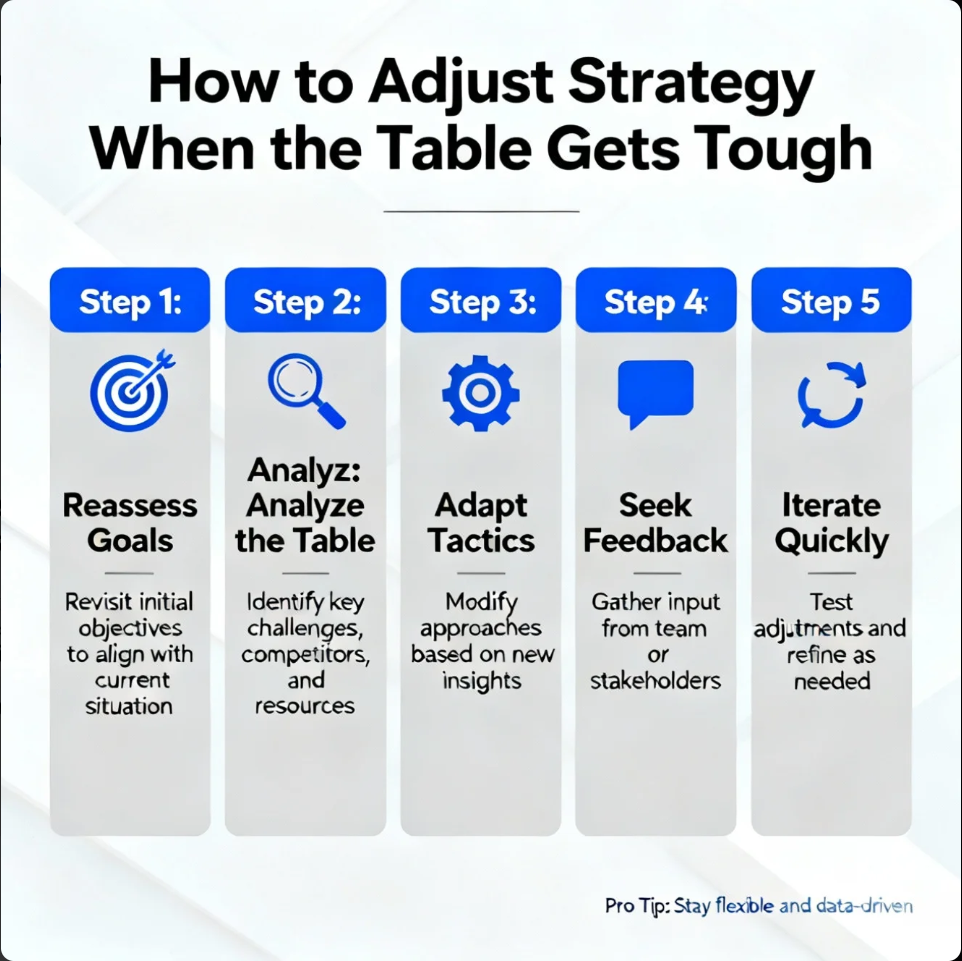

Every poker player knows that no two tables are the same. Sometimes, the action is relaxed and predictable—but other times, the table gets tough. Facing aggressive opponents, unpredictable plays, or high-pressure situations requires more than luck; it demands strategic adjustment.
This article explores how to adjust your strategy when the table gets tough, helping you stay in control and maximize your chances of success.
Assess the Table Dynamics
Identify Opponents’ Styles
The first step is observation. When the table gets tough:
- Take note of aggressive players and their patterns
- Identify tight players who rarely fold
- Recognize passive or unpredictable opponents
Understanding player tendencies allows you to adapt your decisions rather than reacting blindly.
🔗 Outbound link: PokerStrategy – Reading Your Opponents
https://www.pokerstrategy.com
Tighten Your Starting Hands
Play More Selectively
A tough table is not the time for marginal hands. Focus on:
- Premium starting hands (e.g., high pairs, strong suited connectors)
- Position awareness—play more aggressively when in late position
- Avoiding speculative plays unless the odds are favorable
Tightening your hand selection reduces vulnerability to aggressive opponents.
Adjust Betting and Aggression
Control the Pot Size
When facing skilled players, managing pot size is crucial:
- Bet strategically to avoid giving free cards
- Use value betting to maximize strong hands
- Consider slowing down with drawing hands to reduce risk
Adjusting aggression based on table dynamics helps maintain control while minimizing exposure.
Mind Your Table Image
Leverage Perception
Your image at the table influences how opponents react. At a tough table:
- Play consistently to reinforce a strong, disciplined image
- Occasionally mix in bluffs to stay unpredictable
- Avoid erratic or emotional plays that give away information
A credible table image can discourage reckless aggression from others.
🔗 Outbound link: Upswing Poker – Table Image Strategies
https://www.upswingpoker.com
Mental Resilience Is Key
Stay Calm Under Pressure
Tough tables can be mentally exhausting. Strategies to maintain focus include:
- Taking breaks to reset concentration
- Avoiding tilt after a bad beat
- Practicing mindfulness or visualization techniques
A composed mindset allows you to make rational decisions even in high-pressure situations.
Adjust According to Stack Sizes
Adapt to Changing Risk
Chip stacks affect both strategy and decision-making:
- Large stacks allow controlled aggression
- Short stacks require opportunistic plays and careful pot management
- Medium stacks benefit from selective aggression and position play
Understanding stack implications ensures your strategy aligns with your current leverage.
When to Fold and Reset
Knowing When to Walk Away
Sometimes, adjusting strategy doesn’t mean playing every hand—it means choosing your battles wisely:
- Avoid marginal confrontations with skilled opponents
- Recognize when the risk outweighs potential reward
- Use downtime to analyze trends and adjust before returning
Folding strategically can save chips and keep you in the game longer.
Conclusion
Knowing how to adjust your strategy when the table gets tough separates skilled players from amateurs. By observing opponents, tightening hand selection, controlling aggression, maintaining a strong table image, and staying mentally sharp, you can navigate even the most challenging tables effectively.
In poker, as in life, flexibility and composure are just as important as skill and experience.